The Signal You Never Think About
Every time you use your phone or send a message, you’re depending on signals traveling through space, moving so seamlessly that it feels completely natural. Most people never stop to question the invisible system making that connection possible. The connection seems instant and effortless, as if it has always been there, but behind that ease is a system built on precision and deep understanding. Long before smartphones existed, someone had to figure out how to track signals moving across vast distances in space. That work was not done by machines alone, it was done by people who could think, calculate, and solve problems that had never been solved before. One of those people was Melba Roy Mouton, a mathematician whose work helped make space communication possible. She was part of the team responsible for tracking satellites, making sure signals stayed connected as they moved around the Earth. At a time when computers were limited, her calculations and leadership played a critical role in keeping those systems working. Her contributions helped lay the foundation for the technology we now depend on every day. What feels invisible to us now was once complex and uncertain, and it took people like her to turn that uncertainty into reliability. Because of that work, the world we live in today stays connected in ways most of us never think about.
When Computers Were People


4
In the late 1950s, before digital computers became dominant, the word “computer” referred to individuals who performed complex calculations by hand. Melba Roy Mouton joined NASA in 1959 as one of these mathematicians. This was a time when both technology and opportunity were limited, especially for Black women. Yet she stepped into a space that demanded precision and discipline. The work was not theoretical, it had real consequences. Every calculation had to be exact. There was no room for error when dealing with space trajectories. She was part of a generation that laid the groundwork for modern computing and space exploration.
Leading the Work Behind Echo 1
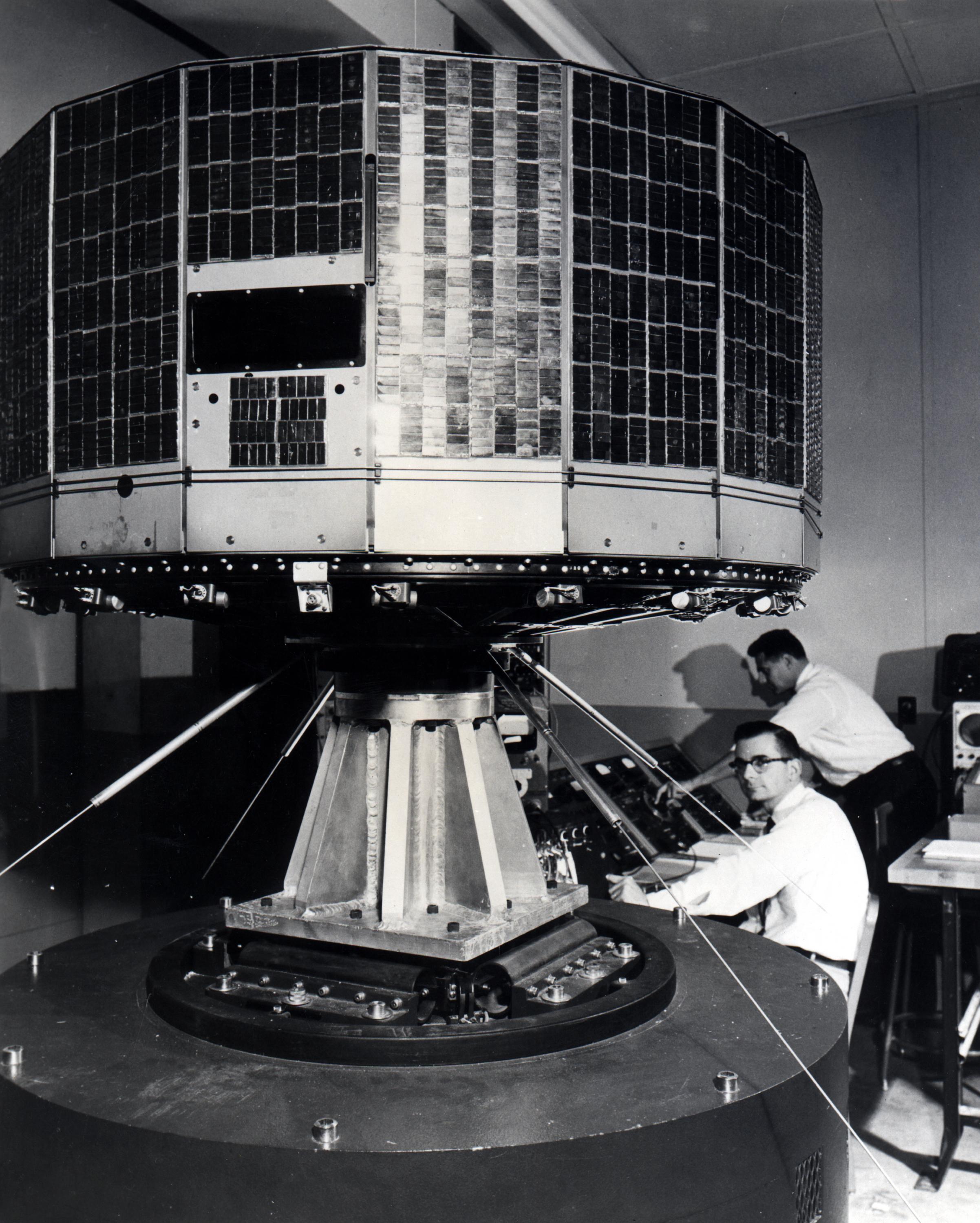

When Echo 1 was launched, it represented a major step forward in communication technology. It was one of America’s first communications satellites, designed to bounce signals across long distances. But launching the satellite was only part of the challenge. It had to be tracked, monitored, and understood in real time. Melba Roy Mouton was not just participating in this effort, she was leading a team responsible for calculating and tracking its orbit. That meant determining where the satellite would be at any given moment and ensuring the signal could be maintained. The math behind that work was critical. Without it, the system would not function.
The Mathematics That Made Communication Possible
The idea of sending a signal into space and having it return accurately depends on timing, trajectory, and precision. Every variable has to be accounted for, from speed to distance to gravitational influence. The work done by Melba Roy Mouton and her team ensured that these variables were understood and controlled. They created the foundation for satellite communication as we know it today. That foundation extends far beyond one project. It influences how GPS systems operate, how global communication networks function, and how data moves across the world. What feels instant today is built on calculations that were once done by hand. That connection is often overlooked.
Working in a System That Was Not Built for Her
It is important to understand the context in which she worked. In 1959, opportunities for Black women in science and engineering were extremely limited. The environment was not designed to support or elevate them. Yet Melba Roy Mouton rose into a leadership role within that system. That required more than technical skill. It required resilience, focus, and a clear sense of purpose. Her presence in that space challenged expectations and expanded what was seen as possible. She was not just contributing to science. She was changing the perception of who could lead in it.
Why Her Story Is Not Widely Known
There are many figures in history whose contributions were essential but not widely recognized. This often happens when the focus is placed on visible milestones rather than the people who made them possible. Space launches, satellites, and technological breakthroughs tend to receive the spotlight. The individuals behind the calculations are often left in the background. Melba Roy Mouton is one of those figures. Her work was foundational, but her name is not as widely known as it should be. That gap in recognition reflects a broader pattern in how history is told.
The Lasting Impact of Her Work
The systems we rely on today did not appear overnight. They were built step by step, calculation by calculation. The work done in the early days of NASA continues to influence modern technology. Satellite communication, navigation systems, and global connectivity all trace back to those early efforts. Melba Roy Mouton played a direct role in shaping that foundation. Her contributions are not abstract. They are part of the infrastructure that supports everyday life. Even if her name is not widely recognized, her impact is present.
Recognizing the Full Story
Understanding history means looking beyond the surface. It means recognizing not just the events, but the people who made those events possible. Melba Roy Mouton represents a level of excellence that deserves to be acknowledged. Her work reminds us that innovation is not just about machines. It is about the people who think, calculate, and solve problems at the highest level. When we recognize those contributions, we gain a fuller picture of how progress actually happens.
Summary and Conclusion
Melba Roy Mouton was a key figure in the early days of NASA, helping lead the mathematical work that made satellite communication possible through projects like Echo 1. At a time when computers were human and opportunities were limited, she played a critical role in tracking and understanding signals moving through space. Her contributions helped lay the groundwork for technologies that shape modern life. While her name may not be widely known, her impact is undeniable. Recognizing her story adds depth to our understanding of both history and innovation. It reminds us that behind every system we rely on, there are people whose work made it possible.