A Corporate Decision With Human Consequences
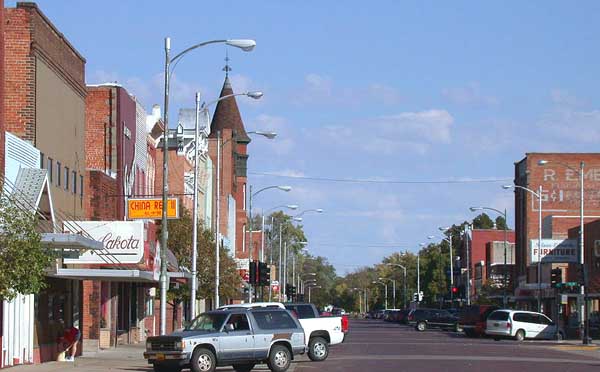
What’s happening in Lexington, Nebraska is not just a business decision; it’s a human one with cascading consequences. When Tyson Foods announced mass layoffs at its plant, the headline numbers alone told a devastating story. Roughly 3,000 people are set to lose their jobs in a town of about 11,000 residents, meaning nearly one-third of the community is directly affected. But the real impact goes far beyond those workers. In towns like Lexington, a major plant is not just an employer, it’s the economic backbone. When that backbone snaps, everything connected to it starts to collapse. Restaurants lose customers, clinics lose patients, landlords lose tenants, and local businesses lose the steady cash flow that keeps them alive. Economists call this the ripple effect, but for the people living there, it feels more like an avalanche. One decision in a boardroom can quietly unravel an entire town.


The January 20 Reality Check
Tyson’s official messaging emphasizes “job transition assistance” and “support resources,” language that sounds reassuring on paper. But anyone who has lived through a plant closure knows what that usually means in practice. It often translates to short-term counseling, résumé workshops, and a few links to job boards in regions that may not even have comparable work available. Come January 20, when these layoffs fully take effect, the reality will be unavoidable. Thousands of people will wake up without a paycheck in a town that does not have thousands of replacement jobs waiting. Many of these workers have spent decades at the plant, building specialized skills tied specifically to food processing. Relocating is not easy, especially for families rooted in the community, homeowners with mortgages, or older workers nearing retirement. The emotional toll compounds the financial one, creating stress that affects marriages, children, and health. This is not a clean break; it’s a slow bleed.
Executive Pay in a Time of Decline
What makes this situation even harder to swallow is what’s happening at the top. The CEO of Tyson’s parent company portfolio, Donnie King, reportedly earned $34 million last year according to SEC filings, up from $22 million the year before. That kind of increase stands in stark contrast to the company’s own stated challenges. Tyson has cited decreasing cattle supply, worsening drought conditions, and declining beef sales as reasons for restructuring and closures. In most workplaces, shrinking revenue leads to shared sacrifice. Raises are paused, bonuses shrink, and leadership signals restraint. Here, the opposite appears to be true. Executive compensation grows while entire communities are destabilized. It raises a simple but uncomfortable question about priorities.
The Workers Who Keep the Country Running
Food processing workers are not abstract numbers on a spreadsheet. They are the people who help keep grocery shelves stocked and supply chains moving. Their work is physically demanding, often dangerous, and rarely glamorous. Many have given decades of their lives to these plants, believing that loyalty and hard work would at least provide stability. To see that stability vanish while executive pay climbs sends a clear message about whose labor is valued most. When someone dedicates 30 or 35 years to one company, they are not just earning a paycheck; they are investing their life. Losing that job late in the game can feel like having the floor pulled out from under you. The emotional impact of that kind of loss cannot be measured in quarterly reports. It shows up in anxiety, depression, and a deep sense of betrayal.
Corporate Greed and the Ripple Effect
The projected impact doesn’t stop at 3,000 layoffs. Analysts and local officials estimate that total job losses in Lexington could reach 6,000 to 7,000 once secondary businesses are affected. That means well over half the town could feel the shockwaves. Schools may see declining enrollment, city services may face budget shortfalls, and property values may drop. This is how towns disintegrate, not overnight, but piece by piece. Meanwhile, the executives making these decisions return home to comfortable lives, insulated from the fallout. The disconnect is jarring. It’s the kind of scenario that makes people question the moral framework of modern corporate America. When profitability is protected at all costs, communities become expendable.
A Generational Misfire
What’s unfolding in Lexington is not just a bad quarter or a tough year; it’s a generational misfire. Decisions like this echo for decades, shaping whether young people stay or leave, whether towns survive or fade. Children growing up in households affected by these layoffs will remember this moment. They will remember the stress, the uncertainty, and the silence that settles into a home when a parent loses work. Corporate leaders often talk about legacy, but legacy is not built only through shareholder value. It’s built through the lives a company touches and the communities it sustains or abandons. Right now, Tyson’s legacy in Lexington is being written in loss.
Summary
The layoffs in Lexington, Nebraska highlight the human cost of corporate restructuring. While Tyson cites economic pressures like drought and declining beef sales, executive compensation continues to rise. Thousands of workers face job loss, and tens of thousands more feel the ripple effects through their community. The language of “transition assistance” offers little comfort against the reality of limited opportunities in a small town. This disconnect between executive reward and worker sacrifice exposes deeper issues in how corporate success is measured. The people most affected are those who have given years, even decades, of their lives to keeping the food system running.
Conclusion
What’s happening in Lexington forces us to confront uncomfortable truths about power, profit, and accountability. When a corporation can increase executive pay while dismantling an entire town’s livelihood, something is deeply out of balance. This is not just about one company or one town; it’s a snapshot of corporate greed playing out in real time. If you want to understand the real impact of these decisions, you don’t need theory or ideology. You just need to look at Lexington, Nebraska. And maybe, the next time you make a choice at the grocery store, remember the people whose lives were upended long before that product reached the shelf.